The board properly went into executive session to discuss traffic for a town project because it was subject to litigation, the AG said. However, it should have reconvened in open session to approve the traffic certification.
Sunday, January 09, 2011
AG Says Wayland Board Broke Open Meeting Law
The Massachusetts attorney general's office has ruled that the Wayland Board of Selectmen violated the state open meeting law in July when it voted in executive session to approve a traffic certification, according to a report by The MetroWest Daily News.


Monday, November 29, 2010
SJC Proposes New Rule on Technology in the Courts
The Rules Committee of the Massachusetts Supreme Judicial Court today published proposed amendments to SJC Rule 1:19, pertaining to cameras in the courts. The proposed amendments are designed, in part, to address the more-varied use of electronic technology in courtrooms, both by traditional media and new media.
The amendments were recommended by the SJC's Judiciary-Media Committee. They were drafted by a subcommittee created to review the current rule and recommend changes in light of advances in technology and journalism since the rule was promulgated.
(I serve on the Judiciary-Media Committee and was on the subcommittee that drafted the proposed rule.)
The proposed revisions change the name of the rule to "Electronic Access to the Courts." They also include an expanded definition of media and a requirement that media register with the Court's Public Information Office. The proposed amendments allow the media to possess and operate electronic devices in the courtroom, subject to certain restrictions. Live blogging from the courtroom generally would be permissible.
The SJC asks that comments be directed to Christine P. Burak, Secretary, Supreme Judicial Court Rules Committee, Supreme Judicial Court, John Adams Courthouse, One Pemberton Square, Boston MA 02108 on or before Friday, Jan. 28, 2011. Comments may also be sent by e-mail to christine.burak@sjc.state.ma.us.
Attached are:
The amendments were recommended by the SJC's Judiciary-Media Committee. They were drafted by a subcommittee created to review the current rule and recommend changes in light of advances in technology and journalism since the rule was promulgated.
(I serve on the Judiciary-Media Committee and was on the subcommittee that drafted the proposed rule.)
The proposed revisions change the name of the rule to "Electronic Access to the Courts." They also include an expanded definition of media and a requirement that media register with the Court's Public Information Office. The proposed amendments allow the media to possess and operate electronic devices in the courtroom, subject to certain restrictions. Live blogging from the courtroom generally would be permissible.
The SJC asks that comments be directed to Christine P. Burak, Secretary, Supreme Judicial Court Rules Committee, Supreme Judicial Court, John Adams Courthouse, One Pemberton Square, Boston MA 02108 on or before Friday, Jan. 28, 2011. Comments may also be sent by e-mail to christine.burak@sjc.state.ma.us.
Attached are:
- The proposed Rule 1:19.
- A blackline comparison with the current rule.
- A summary of the proposed changes prepared by the subcommittee that drafted the amendments.
Wednesday, November 24, 2010
Gloucester Publisher May See Reversal of $30M Judgment
When I was writing for Law.com's Legal Blog Watch, I wrote several posts (here is one) about the case of Jane Daniel, a Gloucester, Mass., woman who was hit with a $33 million verdict against her and her small publishing company, Mt. Ivy Press. The 2001 verdict was awarded to Misha Defonseca and her ghostwriter Vera Lee as the result of disputes over copyright and promotion of Defonseca's memoir, Misha: A Memoire of the Holocaust Years. The book told the story of how Defonseca survived the Holocaust on her own as a young girl, in part through her "adoption" by a pack of wolves. The book was a bestseller in Europe and was the basis for a film.
Several years later, through the detective work of Daniel and genealogical researcher Sharon Sergeant, documents were unearthed showing Defonseca's tale to be as tall as it seemed. Based on these new revelations, Daniel and Mt. Ivy filed a new lawsuit in 2008 seeking to set aside the $33 million judgment, alleging that Defonseca and ghostwriter Lee had perpetrated a fraud on the court. The trial court judge dismissed the case, concluding that it alleged no "extraordinary circumstances" that would warrant relief.
Today, the Massachusetts Appeals Court reinstated the case, but only against Defonseca. It concluded that, if Daniel is able to prove her allegations at trial, then they constitute "extraordinary fraud."
"The plaintiffs have alleged an extraordinary fraud that touched every part of Defonseca's case against them and resulted in a huge verdict. It is true, as the defendants point out, that the book's authenticity was not the central issue at trial. Despite this, it is difficult to imagine that this information, had it been known to Daniel and Mt. Ivy, would not have provided a meritorious defense to at least some of the claims, especially those claims based on the contract.
"Defonseca's entire case, and the manner in which she procured the judgment, was buttressed on what is now admitted to be a lie. The pleadings she filed were false and based on false information. The affidavits she submitted were premised on her phony life story. Her testimony at trial reiterated, and reinforced, her sympathetic but ultimately false tale."
These allegations entitle Daniel to seek relief from the judgment, the Appeals Court said. In addition, the allegations, if true, constitute fraud on the court:
"There are some falsehoods that are so emotionally inflammatory that they impede the jury's ability impartially to evaluate facts and adjudicate a case. Falsely claiming to be a victim (and survivor) of the Holocaust is such a one, particularly where--as here--the claim is the foundation of a book that the publication, distribution, and marketing of were the subjects of the suit. Defonseca perpetrated this falsehood, and it lay at the center of the case."
As for Lee, the ghostwriter, the Appeals Court said that there is no indication that she knew or had reason to know that Defonseca's memoir was fraudulent. Because there is no evidence that she did anything wrong, there is no basis to lift the judgment in her favor.
The ruling is not the end of the case. Daniel will still have to prove her case in court. Today's decision sends the case back to the trial court and allows it to move forward.
Here is today's full opinion: Mt. Ivy Press v. Defonseca.
The ruling is not the end of the case. Daniel will still have to prove her case in court. Today's decision sends the case back to the trial court and allows it to move forward.
Here is today's full opinion: Mt. Ivy Press v. Defonseca.
Tuesday, November 23, 2010
OML Advisory Commission Meets Nov. 29
The Open Meeting Law Advisory Commission has its next meeting on Monday, Nov. 29, 9:30 a.m., at the Attorney General's Office, One Ashburton Place, 21st Floor.
The AG's office has posted the notice of meeting and agenda.
I sit on this commission as the representative of the Massachusetts Newspaper Publishers Association.
Friday, October 22, 2010
Open Meeting Law Commission Meets Monday
The Open Meeting Law Advisory Commission is meeting Monday, Oct. 25, at 9 a.m., at the Office of the Attorney General, One Ashburton Place, 21st Floor, Boston. The AG has posted the notice of meeting and meeting agenda. The meeting is open to the public.
Friday, September 10, 2010
Open Meeting Commission Holds First Meeting
Today was the first meeting of the new Open Meeting Law Advisory Commission, on which I sit as the designee of the Massachusetts Newspaper Publishers Assocation. The other members are:
Jonathan Sclarsic of the AG's office kept the official minutes of the meeting, but here is a quick overview of what happened:
Our next meeting will be Oct. 22 at 10 a.m. at the AG's offices at One Ashburton Place. One item we agreed to discuss then is whether the AG should allow public officials to participate in meetings remotely, by web conference or other means. (The AG has put out a request for comments on this question.)
Note that the AG posts all of these materials on her website at: www.mass.gov/ago/openmeeting.
- The Senate and House chairs of the Joint Committee on State Administration and Regulatory Oversight, Sen. Brian Joyce and Rep. Steven Walsh.
- Loretta Lillios, chief legal counsel in the Middlesex District Attorney's Office, as the designee of the Attorney General.
- Peter I. Hechenbleikner, town manager of Reading, as the designee of the Massachusetts Municipal Association.
Jonathan Sclarsic of the AG's office kept the official minutes of the meeting, but here is a quick overview of what happened:
- Loretta Lillios was elected to serve as chair of the commission for the remainder of 2010.
- Britte McBride, the director of the AG's open government division, gave a report on steps taken so far to implement the law. These include promulgation of interim regulations, publication of a new OML Guide, and presentations to a handful of groups, including the members of the legislature and their staffs. A significant portion of the work of the new office so far has been spent fielding questions from citizens and government officials about the new law, she said.
- McBride also presented a summary of comments the AG received during its series of public hearings on the emergency regulations.
- The committee discussed how we saw our role. We agreed that we would study and discuss various aspects of the law and make recommendations both to the AG and to the legislature. Rep. Walsh indicated that he would work with the committee in filing legislation should we see the need.
Our next meeting will be Oct. 22 at 10 a.m. at the AG's offices at One Ashburton Place. One item we agreed to discuss then is whether the AG should allow public officials to participate in meetings remotely, by web conference or other means. (The AG has put out a request for comments on this question.)
Note that the AG posts all of these materials on her website at: www.mass.gov/ago/openmeeting.
Tuesday, September 07, 2010
Divorce Lawyer Seeks to be the RIAA of Porn
The Hollywood Reporter legal blog, THR,Esq., has an interesting post about a Chicago lawyer who appears to be singlehandedly trying to do what the RIAA did for the music industry -- file lawsuits to go after anyone who uses peer-to-peer networking to download copyrighted porn.
The lawyer has filed at least a half-dozen lawsuits within the past two weeks targeting hundreds of "John Doe" defendants, accusing them of stealing copyright movies ranging from gay erotica to the cult classic, "Debbie Does Dallas."
The lawyer, John L. Steele, has set up a website as the Media Copyright Group in Chicago. The site advertises that the company "tracks, identifies and pursues damages against people who pirate copyrighted media via P2P networks." THR, Esq. has the lawsuit he filed on behalf of Hard Drive Productions, owner of the website Amateur Allure.
What makes all this even more interesting is that Steele's law firm website utters not a word of any of it or mentions any practice relating to copyright law. Rather, the site describes both the firm and Steele as a family law attorney who also handles consumer bankruptcies.
Steele's not alone in going after porn pirates, says THR, Esq. In Texas, lawyer Evan Stone has filed lawsuits against hundreds of alleged pirates on behalf of film and video companies.
So if you are sharing porn on BitTorrent, watch out for the copyright patrol.
New Open Meeting Commission Sets First Meeting
The first meeting of Massachusetts' new Open Meeting Law Advisory Commission will be held this Friday, Sept. 10, at 10 a.m., at the Attorney General's office in Boston. The AG's office posted the meeting notice and agenda today. (I am a member of this commission as the designee of the Massachusetts Newspaper Publishers Association.)
The commission was created as part of the new open meeting law that took effect July 1. Section 19(c) of the law says:
There shall be an open meeting law advisory commission. The commission shall consist of 5 members, 2 of whom shall be the chairmen of the joint committee on state administration and regulatory oversight, 1 of whom shall be the president of the Massachusetts Municipal Association or his designee, 1 of whom shall be the president of the Massachusetts Newspaper Publishers Association or his designee, and 1 of whom shall be the attorney general or his designee.
The commission shall review issues relative to the open meeting law and shall submit to the attorney general recommendations for changes to the regulations, trainings, and educational initiatives relative to the open meeting law as it deems necessary and appropriate.
The law also provides that the AG is to report to the commission annually on the enforcement of the open meeting law.
Wednesday, September 01, 2010
Long Wait for School Committee Minutes
Even when public bodies meet behind closed doors, they are required by law to keep minutes. Once the reason for meeting in private no longer exists, the minutes are to be made public.
According to Stacie Galang, a reporter for The Salem News, the Peabody School Committee had "picked up the habit of conducting closed-door meetings without ever releasing those minutes publicly." (I fear this habit is contagious.) So last April, she called and asked for all the executive-session minutes for the last year. She was told they would be released soon.
Writing at the New England First Amendment Center blog, she relates what happened next. She waited. And she waited. After nearly three months of waiting, the newspaper got its lawyer, Rob Bertsche, to file a complaint with the AG.
Another week would pass before the School Committee would give Galang its minutes. When it finally did, they covered only 10 of the 31 meetings for the time period.
According to Stacie Galang, a reporter for The Salem News, the Peabody School Committee had "picked up the habit of conducting closed-door meetings without ever releasing those minutes publicly." (I fear this habit is contagious.) So last April, she called and asked for all the executive-session minutes for the last year. She was told they would be released soon.
Writing at the New England First Amendment Center blog, she relates what happened next. She waited. And she waited. After nearly three months of waiting, the newspaper got its lawyer, Rob Bertsche, to file a complaint with the AG.
Another week would pass before the School Committee would give Galang its minutes. When it finally did, they covered only 10 of the 31 meetings for the time period.
Tuesday, August 31, 2010
Should the Open Meeting Law allow Teleconferencing? AG Seeks Comments
Should members of government boards be allowed to attend meetings without being physically present, using teleconferencing, Web conferencing or some similar technology?
The Attorney General's Division of Open Government is about to take up that question. Today, it issued a request for public comment on remote participation in public meetings. The new open meeting law that took effect July 1 does not directly authorize remote participation, but it does give the AG the discretion to allow remote participation if she so chooses.
The notice issued today requests public comment on whether to allow remote participation. It encourages anyone who submits comments to address these questions:
The Attorney General's Division of Open Government is about to take up that question. Today, it issued a request for public comment on remote participation in public meetings. The new open meeting law that took effect July 1 does not directly authorize remote participation, but it does give the AG the discretion to allow remote participation if she so chooses.
The notice issued today requests public comment on whether to allow remote participation. It encourages anyone who submits comments to address these questions:
- Should the Attorney General authorize remote participation in meetings by members of public bodies?
- If authorized, what, if any, technology should be required? (i.e., conference call ability; video conferencing)
- If authorized, what, if any, provisions should be adopted to address technical difficulties that may arise during the course of remote participation in a meeting?
- If authorized, should limits be placed on the frequency with which members of public bodies may participate remotely in meetings?
- If authorized, should limits be placed on the reasons for which a member of a public body may be allowed to participate remotely (i.e. only allow remote participation because of distance, disability or other medical reason, emergency, etc.)?
- Currently, roll-call votes are only required in order to go into executive sessions and to make decisions during executive sessions. If authorized, should roll-call votes be required for all votes taken when one or more members are participating remotely?
- If authorized, should members participating remotely be required to have access to all documents and other materials used by the public body during a meeting? How should documents be made available?
- If authorized, what, if any, requirements should be in place to maintain confidentiality during executive session?
Friday, August 27, 2010
Video is Smoking Gun in Open Meeting Cases
Journalists and citizens seeking to enforce open meeting laws have a new weapon at their disposal: video. In two recent cases in Massachusetts, open meeting law violations caught on tape forced the violators to admit their mistakes.
In a post here in July, I wrote about the reporter for The Patriot Ledger who recorded the Weymouth Housing Authority board as it threatened to forcibly evict citizens who protested an apparent open meeting violation. It appeared that the board met in secret to select a new executive director.
Thanks in part to that videotape as well as to a series of reports by The Patriot Ledger, the Weymouth Housing Authority later rescinded its pick of a new executive director. The board's chairman explained that the board wanted "to clear up any perception of backroom dealing or nefarious activity."
Now comes a similar incident involving the Board of Selectmen of the town of Wayland. Just minutes before the start of their July 8 meeting, the selectmen huddled to discuss appointments to the town's historic and conservation commissions -- appointments they were scheduled to discuss on the record once their formal meeting got underway.
From their pre-meeting discussion, it appears they are reviewing decisions they'd already made about who would get the appointments -- decisions that are required by law to be discussed in public. Later, in their 0n-the-record meeting, they in fact make the appointments consistent with the pre-meeting discusssion.
Unfortunately for them, the town's public access cable TV station, WayCAM, had already started recording. The selectmen can be clearly heard on the recording discussing the candidates.
Remarkably, when a citizen wrote to the selectmen to complain about the violation, the chairman of the board derided the complaint as "borderline harassment." At the selectmen's meeting on July 26, the board discusses the complaint and dismisses it as unfounded. "It's borderline harassment," the chairman says. "I'm getting a little tired of it."
Remarkably, when a citizen wrote to the selectmen to complain about the violation, the chairman of the board derided the complaint as "borderline harassment." At the selectmen's meeting on July 26, the board discusses the complaint and dismisses it as unfounded. "It's borderline harassment," the chairman says. "I'm getting a little tired of it."
By its next meeting on Aug. 16, the board had become much more contrite, thanks to having viewed the video. At the Aug. 16 meeting, the board admitted its members had acted inappropriately in the July 8 meeting. In a statement, the board said it was "clear that the four [selectmen] were mistaken in referring to some of the candidates who were being considered for appointment that evening."
Below is a short clip of the selectmen's off-the-record discussion. For a longer video showing part of the July 8 and July 26 meetings, click here. To see the video of their Aug. 16 meeting, click here. See also the report from Wicked Local Wayland: Wayland selectmen admit to impropriety.
Below is a short clip of the selectmen's off-the-record discussion. For a longer video showing part of the July 8 and July 26 meetings, click here. To see the video of their Aug. 16 meeting, click here. See also the report from Wicked Local Wayland: Wayland selectmen admit to impropriety.
Wayland BoS 070810 Pre-Meeting from WaylandVotersNetwork on Vimeo.
Thursday, August 26, 2010
Podcast: F. Lee Bailey on the Clemens Indictment
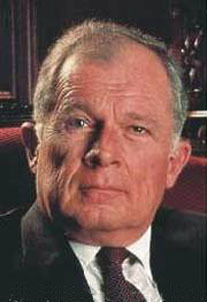 Legendary criminal defense lawyer F. Lee Bailey and New York Times reporter Michael S. Schmidt join us to discuss the indictment of Roger Clemens on this week's installment of the legal-affairs podcast Lawyer2Lawyer.
You can listen to the program in your browser or download the MP3 file from the Legal Talk Network.
Never miss an episode of Lawyer2Lawyer by subscribing to the show’s RSS feed or by subscribing on iTunes.
Friday, August 20, 2010
Podcast: Justice Denied in the Markoff Case?
Three great guests join us on this week's Lawyer2Lawyer podcast to discuss the prison suicide of accused Craigslist killer Philip Markoff and what it means for the case, the victims' families and the criminal justice system.
Our guests are:
Never miss an episode of Lawyer2Lawyer by subscribing to the show’s RSS feed or by subscribing on iTunes.
Our guests are:
- Douglas Berman, professor of law at Moritz College of Law at Ohio State University and author of the blog Sentencing Law and Policy.
- Elie Mystal, an editor of Above the Law.
- Leslie Walker, executive director of Prisoners’ Legal Services in Massachusetts.
Never miss an episode of Lawyer2Lawyer by subscribing to the show’s RSS feed or by subscribing on iTunes.
Thursday, August 12, 2010
Rep. Cabral Op-ed on Open Meeting Law
I urge you to read Fix weak Open Meeting Law enforcement, an op-ed on SouthCoastToday.com by state Rep. Antonio F.D. Cabral, D-New Bedford. As he points out, the new open meeting law has many strengths, but also a major weakness -- the lack of an effective enforcement mechanism.
Rep. Cabral's opinion is underscored by the fact that he was the primary architect over a number of years of efforts to reform the law. As House chair of the Joint Committee on State Administration and Regulatory Oversight in prior sessions of the legislature, he pushed to give the law more teeth.
Here is part of what he says in the op-ed:
Rep. Cabral's opinion is underscored by the fact that he was the primary architect over a number of years of efforts to reform the law. As House chair of the Joint Committee on State Administration and Regulatory Oversight in prior sessions of the legislature, he pushed to give the law more teeth.
Here is part of what he says in the op-ed:
I proposed giving courts the ability to impose larger fines and to impose fines on board members individually. Fines picked up by taxpayers do little to change public officials' behavior. Similarly, I wanted to strengthen private enforcement by allowing courts to force public bodies that violate the law to cover the attorney's fees of those who successfully challenge them.Read the full piece at SouthCoastToday.
The new law not only fails to include these improvements, but made it significantly harder for prosecutors to fine rule breakers. For the first time, prosecutors now need to prove not only that a board violated the law, but that the violation was "intentional," a much higher standard and very difficult to prove when speaking about a group of people rather than a single individual.
Thursday, August 05, 2010
AG Holds First Hearing on Open Meeting Regs
Attorney General Martha Coakley's office today held the first of four scheduled public hearings on emergency regulations to implement the new Massachusetts open meeting law that took effect July 1. Turnout was low. My notes show just six people testified. The scheduled three-hour hearing was over after one hour.
Among those who testified were Rosario C. Malone, city clerk of Waltham; Theodora Eaton, town clerk of Needham and president of the Massachusetts Town Clerks' Association; Michael Yunits, Holbrook town administrator; Allison Amanis, acting executive director of the Commonwealth Covenant Fund; Kevin McCrea, former Boston mayoral candidate and advocate for open government; and Marty Rosenthal, a lawyer and co-chair of Brookline PAX.
Although the hearing's focus was the AG's regulations, most of the testimony focused on dissatisfaction with the statute. Obviously, the AG doesn't write the law, it simply carries it out. Of course, going forward, Coakley could be influential in urging the legislature to make "corrections" in the law.
I won't try to recap all the testimony. but the major points addressed were these:
Among those who testified were Rosario C. Malone, city clerk of Waltham; Theodora Eaton, town clerk of Needham and president of the Massachusetts Town Clerks' Association; Michael Yunits, Holbrook town administrator; Allison Amanis, acting executive director of the Commonwealth Covenant Fund; Kevin McCrea, former Boston mayoral candidate and advocate for open government; and Marty Rosenthal, a lawyer and co-chair of Brookline PAX.
Although the hearing's focus was the AG's regulations, most of the testimony focused on dissatisfaction with the statute. Obviously, the AG doesn't write the law, it simply carries it out. Of course, going forward, Coakley could be influential in urging the legislature to make "corrections" in the law.
I won't try to recap all the testimony. but the major points addressed were these:
- Posting requirement. Clerks remain concerned with the law's requirement that local government bodies post meeting notices in a way that they can be seen by the public 24 hours a day. They call this an "unfunded mandate" in that it may require new technology and more staff time. Oddly, two of the people who testified criticized the regulations for prohibiting the posting of notices on municipal Web sites. In fact, the regulations expressly allow posting on the Web, provided the notice is also posted in a municipal building that is accessible 24/7, such as a police or fire station.
- Remote participation. The new law authorizes the AG, "by regulation or letter ruling," to "authorize remote participation by members of a public body not present at the meeting location." The AG's regs are silent on this issue. The AG's Open Meeting Law Guide says the AG is considering this issue but that, for now, remote participation is not allowed. Several of the people who testified urged the AG to address and clarify this issue.
- Agenda. The new open meeting law requires meeting notices to include agendas. This was not a requirement of the former law. The town officials who testified believe this could be counterproductive.
- Records retention. Any documents used during a meeting subject to the law become public records and must be retained as such. Several town officials objected that this requirement is onerous. This was surprising, given that the former law had pretty much the same requirement. It makes me wonder whether they'd been ignoring this requirement for years.
- Filing of complaints. The AG's regulations say that complaints alleging open meeting violations should, for local government bodies, be filed with the municipal clerk. Eaton, the president of the Town Clerks' Association, contended that this is not in accord with the statute, which says the initial complaint shall be filed "with the public body."
McCrea's testimony raised several questions and concerns about how diligent the AG will be in enforcing the law and about carry-over of complaints under the old law that remain unresolved. He echoed concerns I've raised frequently on this blog that the law lacks teeth and needs to be toughened.
Rosenthal suggested that the regs should make better use of technology. In particular, he said Brookline has a listserv to distribute meeting notices and agendas to interested citizens and suggested the AG might consider something similar for other government bodies.
The next hearing is Monday in Worcester.
Wednesday, August 04, 2010
After Four Months, AG Replaces Open Gov Director
Just four months after she named Robert Nasdor as director of the new Division of Open Government, Attorney General Martha Coakley has named someone new to the post, Britte McBride, formerly an assistant AG in the Attorney General's Policy and Government Division.
The change in command comes one month after the AG took over all responsibility for enforcement of the open meeting law on both the state and local levels.
Tomorrow, the AG's office begins a series of four public hearings on regulations to implement her office's new responsibilities.
The change in command comes one month after the AG took over all responsibility for enforcement of the open meeting law on both the state and local levels.
Tomorrow, the AG's office begins a series of four public hearings on regulations to implement her office's new responsibilities.
I spoke briefly today to McBride, who said she was given the director's position due to her background in policy and government, experience that will be highly relevant to the division's work over the coming months.
Tuesday, July 20, 2010
Boston Globe: Open Meetings Law Irks Many
Reporter Sean Murphy has a good overview today in The Boston Globe of some of the issues swirling around the new Massachusetts open meeting law. He quotes me talking about the law's lack of teeth. "The fact that public officials can violate the open meeting law and not face consequences is a travesty," I say in the piece.
Thursday, July 15, 2010
AG Sets Public Hearings on Open Meeting Regs
The Attorney General's Office today announced a schedule of public hearings on proposed regulations to implement the new open meeting law that took effect July 1. Hearings will be held Aug. 5 in Boston, Aug. 9 in Worcester, Aug. 10 in Springfield, and Aug. 11 in New Bedford. See the notice for times and locations. Testimony may also be presented in writing, the notice says.
Thursday, July 08, 2010
Poll: Is the Open Meeting Law Tough Enough?
Should there be tougher penalties against public officials who violate the open meeting and public records laws? The Patriot Ledger is conducting a poll. Head on over and cast your vote.
The poll follows its story and video yesterday depicting a clear violation of the law by the Weymouth Housing Authority. (I blogged it also.)
Regular readers of this blog will know how I voted in the poll. I have long maintained that Massachusetts has one of the weakest open meeting laws in the nation because it lacks teeth. The majority of states impose civil or criminal penalties on public officials who violate the law. In Mass., officials who violate the law face no monetary consequences, even if their violations are intentional and repeated.
Wednesday, July 07, 2010
Weymouth Housing Authority Head Picked in Secret
When a government board makes a hiring decision, it is supposed to do it in public, as required by the state's open meeting law. The law permits a board some leeway to act privately when first screening potential candidates. But by the time the board gets to consideration of the finalists, the public has a right to sit in on that process.
Apparently, this is news to the Weymouth Housing Authority. The Patriot Ledger reports that the authority's board of commissioners made its selection of a new executive director without ever discussing the selection in a public meeting. The board went straight from conducting interviews with finalists to making a final job offer, without ever meeting in public to discuss who it would select from among the candidates and why. This is a clear violation of the law.
When local citizens protested the closed-door meeting at which the board made the job offer, the board threatened to have them forcibly removed. A Patriot Ledger reporter caught the event on videotape:
Apparently, this is news to the Weymouth Housing Authority. The Patriot Ledger reports that the authority's board of commissioners made its selection of a new executive director without ever discussing the selection in a public meeting. The board went straight from conducting interviews with finalists to making a final job offer, without ever meeting in public to discuss who it would select from among the candidates and why. This is a clear violation of the law.
When local citizens protested the closed-door meeting at which the board made the job offer, the board threatened to have them forcibly removed. A Patriot Ledger reporter caught the event on videotape:
Subscribe to:
Posts (Atom)